
Do You Need a Permit to Finish a Basement in Ontario?
Find out which basement changes may need a permit, how a separate suite differs from a rec room, and why electrical approval is separate.
By Residence Redefined · Ontario homeowner guide
It depends on what you are changing. Structural work, material alterations, plumbing changes and creating a separate dwelling can require a building permit. Cosmetic updates are different. Ask your municipal building department about the actual scope before you start, even if the basement will only be used by your family.
- Describe the work—not just ‘basement finishing’—when asking about permit requirements.
- A separate apartment brings additional design and approval considerations.
- Electrical notification through ESA is separate from the municipal building permit.
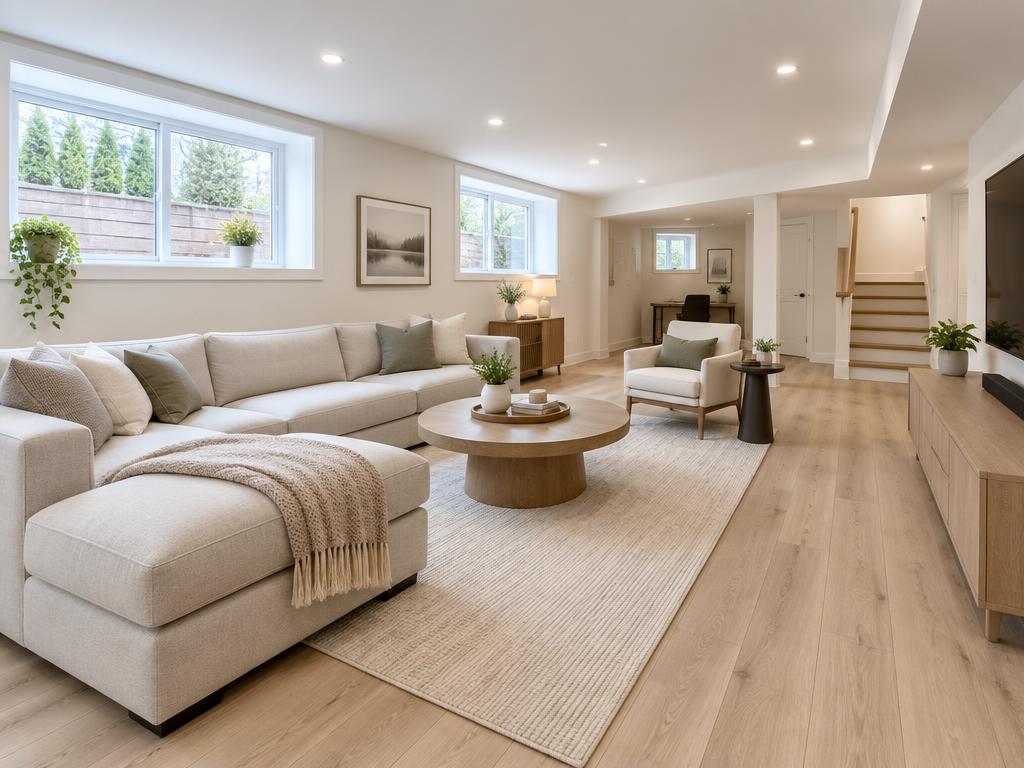
The scope matters more than the label
‘Finishing a basement’ can mean painting an existing room, adding a bathroom, moving walls or building an apartment. Those are very different projects. Whether you plan to rent the space is not the only factor that determines whether a permit is required.
Toronto’s permit guidance, for example, identifies structural or material alterations, changes to room size or use, and new or altered openings among work that may require a permit. Its list is not exhaustive. Your own municipality should confirm the requirements for your particular project.
Which changes should you check before construction?
Before requesting quotes, write down the proposed changes and identify anything affecting the building structure, systems or use. A new bedroom, bathroom or enlarged window should not be treated as simply choosing finishes.
Bring a sketch and photographs when discussing the scope with the building department or a designer. If several trades are involved, ensure the proposed layout and systems are coordinated rather than making decisions separately on site.
- Adding, removing or relocating walls, particularly where the structure may be affected.
- Adding or moving plumbing fixtures, a bathroom or kitchen facilities.
- Changing windows, exterior openings, entrances, stairs or the building envelope.
- Creating a separate dwelling or changing how rooms are used.
- Changing heating or ventilation arrangements as part of the renovation.
A family rec room and a second unit are different projects
A basement used as part of one household is not automatically a separate dwelling. A self-contained apartment adds a distinct use that must be assessed against applicable zoning and Building Code requirements. Fire and sound separation, exits, ventilation and the relationship between units become important design questions.
If a future apartment is your goal, say so at the start. A layout designed only for a recreation room may need expensive rework to support an approvable second unit. Equally, a kitchen or separate entrance does not establish that a unit is legal.
For an already finished basement, ask the municipality about its permit history and the proposed change. Existing construction may need to be documented and assessed; do not assume previous owners obtained all required approvals.
Electrical work has a separate approval process
The Electrical Safety Authority states that almost all electrical work must be reported through a notification of work. This is separate from a building permit. Obtaining one does not automatically satisfy the other process.
If you hire someone to perform electrical work in Ontario, ESA advises using a Licensed Electrical Contractor. Coordinate the required notification and inspections with the contractor, and retain the electrical acceptance documentation with your renovation records.
What happens if work starts without a required permit?
Ontario’s building-permit guidance explains that construction without a required permit can lead to enforcement. You may have to stop work, obtain the permit and correct non-compliant construction. Work already concealed can be harder to assess and document.
Do not assume a later application automatically approves what has already been built. If work has started, contact the municipal building department and describe the situation honestly. A designer can help document the existing condition and prepare a proposed correction path, but the municipality decides what is acceptable.
Avoid blanket assumptions about insurance or resale consequences: those depend on the circumstances and should be discussed with your insurer or qualified legal adviser. Keeping reliable permit and inspection records is a practical safeguard.
A practical sequence for your basement renovation
Start with your intended use and a clear scope. Confirm permit requirements, measure the existing space and prepare the drawings and supporting documents required for that scope. Resolve significant layout or consultant questions before construction pricing is finalized.
Apply for the required permits, address reviewer comments and arrange inspections as work proceeds. Keep the approved plans available to your contractor and discuss changes before they are built. This makes the process easier to follow than treating approvals as an afterthought.
Official sources & further reading
- Ontario — Building permits and enforcement ↗
- Toronto — When do I need a building permit? ↗
- ESA — What you need to know about electrical notifications ↗
This is general planning information, not a property-specific code assessment or an assurance of approval. Requirements depend on the building, proposed use, applicable Building Code provisions and local zoning. Your municipality makes permit and inspection decisions.